There's a story told about James II as he was fleeing from the Battle of the Boyne. He needed to get across the river at a particularly wide point, and quick, so he hired this ferryman. After a while the ferryman looked over his shoulder and said "Here - I know you. You're James II! Wait 'til I tell the wife! So listen - how did the battle go? Who won?" James fixed him with a very stony stare and said "Never you mind who won the battle. No matter who won it, you'll still be just the ferryman".
Feeling cynical? Here's some ammo. "Don't vote - it only encourages them". "If voting changed anything, they'd have banned it years ago". Very droll. With an element of truth. But 99.9% bullshit.
Politics is the best we have. Of course it's possible to wish things were better. If you're a unionist, it'd be nice if the last forty years hadn't happened and Basil Brooke's great-grandson was being groomed to take over and keep the taigs where they belong. If you're a nationalist, it'd be nice if the last forty years had resulted in a reunited Ireland, with a transformed south as well as a transformed north, where bigotry and discrimination were as popular as drink-driving and self-harming. But that ain't where we are right now.
On the other hand, tthings are better. The Orange state, as Sinn Féin frequently points out, has been dismantled. The DUP has decided it makes sense to work for the common good with those they disagree with. The sight of fourteen Sinn Féin TDs arriving in Stormont to pose for a picture with their northern colleagues sent a strong signal that reunification is still central to Shinner policy.
Are we near to reunification? No, but we're a lot nearer than we were forty years ago. Are we near to equality? No, but we're a lot nearer than we were forty years ago. The catch with sitting by the TV being cynical is that other people get out and shape things the way they want them. If we stay ferrymen, it's because we choose to stay ferrymen.
And don't - pu-LEASE don't say "I think it's going to rain today". Remember whose anniversary it is today? Remember the four votes that pushed Michelle Gildernew over the line in Fermanagh/South Tyrone last time out? Get off your jaundiced arse and down to the polling centre this minute.
Five things we know after the Leaders’ Debate last night:
1.Maggie Ritchie has reverted. For a while she had gone a bit Thatcher – the naturally grinding voice transformed overnight into a near-whisper. It mustn’t have worked because last night she was back at her biting-the-big-Halloween-apple best. As for other features of her speaking style, there’s good news and there’s bad news. The good news is that she seems to have inherited Mark Durkan’s phrase-making speech-writer: “Marty has a case of Peteritis’ and “David Ford is a little lapdog for the DUP”. The audience loved it. The bad news is that Mark Durkan’s speeches were peppered with clever one-liners but he still failed as party leader and his party goes on sinking deeper beneath the waves.
2.Politics here isn’t nearly as much fun as it used to be. Time was when you could rely on the DUP to go a bit ballistic when it came within 100 metres of a Sinn Féin representative. Now Peter Robinson and Martin McGuinness prop each other up in debates, and any cut-and-thrust is reserved for fellow-unionists or fellow-nationalists. That can be fun to a degree (see No 1 above) but you have to be careful if you’re Peter Robinson. Tip too much the other way and go on excessively about the harmonious-working-relationship with the Shinners and your backwoods boys will tear you to pieces for a taig-lover.
3.TV debates are like knock-out Cup games – anything can happen on the night. Last time out Robinson and McGuinness were streets ahead of the other three; this time Ritchie and Elliott at least got the best laughs. Especially Elliott, when he said he wanted to put on record that as UUP leader he would not take the post of Deputy First Minister to Martin McGuinness as First Minister. Presenter Mark Carruthers didn’t say “Too right you won’t, Tom son!” but he came near. Very near.
4.Peter Robinson agrees with me. Not about everything, true, but he does believe that the media are in part to blame for a dull campaign and that starting a leaders’ debate at twenty to eleven and ending it at ten past midnight is dumb, dumb, dumb. Exactly my point in yesterday’s blog. (Thinks: can I sue the FM for breach of copyright?)
5.Politics is about policies but it needs emotion too. Grace under pressure is one thing but dull enumeration of how many houses your manifesto says your party will build can send people off in search of the late-night movie. I hate to say it but I’m beginning to miss Ian Paisley. Sorta.
Maybe it’s started. You know those short periods of time that pass but somehow you don’t notice them and can’t remember them afterwards. You’re driving from Belfast to Omagh and suddenly you realize you’re at the Ballygawley Roundabout and for the life of you you can’t remember the last five miles.
Maybe that's what happened this morning, only in sound. I was tuned into BBC Radio Ulster between half-past seven and half-past eight. Yes I heard Eddie O'Gorman on the Business News, yes I heard Thought for the Day (simply superb, and no, eagles tearing at my liver wouldn't get me to say who gave it) I heard the weather forecast, I heard the headlines. I listened for a full hour to the biggest news and current affairs programme available here in the north, during its prime-time listening period, and do you know, I didn’t hear one serious word about the Assembly and local council elections that will be happening TWO DAYS FROM NOW. A jokey item about a retiring 82-year-old councillor from North Antrim but that was it.
Maybe it was the Ballygawley Roundabout syndrome in action. Or maybe the edge has gone off unionist vs republican politics here and people genuinely aren’t interested.
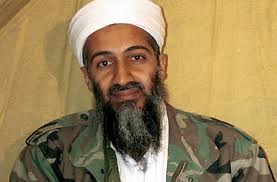
Or maybe it's that we tend to take our lead from the media. If they’re excited about Osama bin Laden’s death, so are we. If they’re upset about an earthquake on the opposite side of the world, we're distraught. And if they decide that the election of those who govern us is so boring as to be scarcely worth mentioning, we tend to imitate their yawn.
Oh sorry – I’ve just remembered. Immediately before half-past eight, Conor Bradford did mention the election. He reminded us there’d be a televised leaders’ debate on BBC tonight. Scheduled to catch a massive audience. Starting at 10.40 pm.
A man who taught in China told me yesterday that he used to call on his former students from time to time. First, though, he had to let them know he was coming. If he didn’t, they risked being unprepared and losing face, and that was a very serious matter for them. It sounds odd at first but there’s a bit of it in all of us. We like to be in control, ready for the future, not caught on the hop, because when that happens it can cause a lot of pain.
So as many US citizens gather in public places and chant “USA! USA!” today, it’s in part about having caused al Qaeda the ultimate loss of face – the sudden death of their leader. Now that organisation has been put on the back foot, just as the US was put on the back foot with the destruction and death of 9/11.
A few points about the war on terror.
1.Terrorism is a strategy, not a philosophy. George Washington was a terrorist of sorts, Michael Collins certainly was and the ANC in South Africa indisputably were. So it’s the cause for which people are engaging in terrorism that makes it good or bad. (Stupid word anyway, terrorism. All armed conflict by definition inspires and aims to inspire terror. Remember Shock and Awe?)
2.Since we can act but can’t always control the consequences of our actions, we must be ready for some possible loss of face. The killing of Osama bin Laden could demoralise al Qaeda, wound it fatally; alternatively, it could give him martyr status and bring a surge in support for his cause. Remember 1916?
3.If al Qaeda is at war with the US, Britain and other countries, it must be one of the most unsuccessful campaigns ever fought. Granted 9/11 resulted in some 3,000 US dead, but over a ten-year period, how many casualties have al Qaeda inflicted? It can’t be more than 5,000. In the same period in Vietnam, the North Vietnamese and Viet Cong killed over 50,000 Americans (and some 2,000,000 Vietnamese were killed). It’s sickening even to think, but success in war has to do with how many of the other side you’ve managed to kill. Using this yardstick, al Qaeda would need several centuries to have any hope of victory.
4.Finally and the question that often gets buried: what is al Quaeda fighting for? I honestly don’t know so I’d welcome answers. But don’t say “Because they hate us” - that’s a cop-out.
It’s funny – that’s funny-peculiar, not funny-ha-ha - the deal life serves up to different people.
Today in Westminster Abbey, a young man aged 29 who’s known nothing but privilege all his life will be married to a young woman who, while certainly not from the level of comfort of her husband, is very comfortably middle-class and will, from here on in, be as privileged as the man she’s married. Collectively, they’ll live lives where they may receive help in squeezing their toothpaste tube. Together they’ll be known among other things as the Baron and Baroness of Carrickfergus.
Six days from today will be the thirtieth anniversary of the death of another young man at the age of 27. This man was intimidated from his home at an early age, spent much of his adult life in prison and died after 66 days on hunger strike. At the time of his death he had been elected MP for Fermanagh-South Tyrone. His life was short, full of danger and deprivation, and his death long-drawn-out and painful.
We might disagree over how much each young man earned by his actions what life gave him. There’d be less disagreement over which experienced/ will experience the more comfortable life. But history, I'm sure, will have no problem in deciding which life - that of Prince William or Bobby Sands – is the more deserving of respect.
I was on the Stephen Nolan show on BBC Radio Ulster yesterday, discussing plans a man called Jim has for an Orange Centre in East Belfast. Jim sounded perfectly sane but his project sounds like a March hare on acid.
He figures such a centre is needed because ‘unionism and Orangeism have been marginalised’. Eh? With 3,000 Orange marches a year? I thought it was the rest of us, pulling aside for yet another march to pass, that were the marginalized ones.
Certainly let’s celebrate those things we value, let’s have a mosaic-type Belfast dotted with different centres of culture. But the object of celebration must have value and the Orange Order has two difficulties on this front: its history and its ordinances.
The Order came into being in 1795 with the killing of some thirty Catholics, a number of them unarmed, at what was called ‘The Battle of the Diamond’. That same year Lord Gosford, the Governor of Armagh, said “It is no secret that a persecution is now raging in this country…the only crime is…profession of the Roman Catholic faith”.
Orange marches in Belfast throughout the nineteenth century repeatedly drew intense rioting that resulted in the destruction of Catholic homes and the taking of Catholic lives (see Andy Boyd’s book Holy War in Belfast). With partition in the twentieth century, unionist politicians almost always had to be members of the Orange Order - remember David Trimble doing his famous arm-in-arm with Paisley, celebrating Orange feet on the Catholic Garvaghy Road?
In its ordinances, the Order declares that all Orangemen “must strenuously oppose the fatal errors and doctrines of the Church of Rome” and must “scrupulously avoid countenancing (by his presence or otherwirse) any act or ceremony of Popish worship” (that’s the Mass, the sacred centrepiece of Catholic liturgy). If you’re a Catholic, if you’re married to a Catholic, if you attended a Catholic service, you can’t be an Orangeman.
Yes, there is a need to heal the wounds we have inflicted on one another over the years. Yes, there is a great deal of learning to be done about Ireland. But if an instititution in its history over centuries and in its rules and ordinances shows an inherent hostility to the faith with which nearly fifty per cent of the population identify, will celebrating that institution help healing?
Come on, Jim. The Good Friday Agreement promises us all freedom from sectarian harassment, and you want public money to celebrate the achievements of the Orange Order? Tell me this is a massive Easter spoof.
“I counted the cost of this, and I am ready to pay it”.
Eamonn Ceannt in a letter to his wife Áine,
written an hour before his execution:
“I am here without hope of this world, and without fear, calmly awaiting the end”.
One of the things we’ve been taught to believe about the Easter Rising is that the people of Dublin rejected the rebels, spat at them and shouted abuse as they were led away. It was only when the execution of the leaders occurred that public sympathy turned. I’ve always found that hard to believe. Maybe, as a prominent republican suggested to me recently, maybe a reporter in one Dublin street saw open hostility and assumed it applied in all streets. And indeed some people had reasons to react against the Rising: if you were a unionist, if you’d lost property or family in the battle, if you were a Redmondite, if your husband or brother or father was off fighting with the British Army in Europe.
But there were contrary reports that suggested a different public mood, even before the execution of the leaders. A Canadian journalist, Frederick Arthur McKenzie, noted that particularly in poorer areas, there was “a vast amount of sympathy with the rebels, especially after the rebels were defeated”. Thomas Johnson, a Labour leader, saw “no sign of sympathy for the rebels but general admiration for their courage and strategy”. It figures. The Irish people, like most people, don’t like trouble or destruction or bloodshed. But equally, like most people, they admire those who are dedicated to their country’s future and they instinctively side with the underdog. Pearse and his followers were classic cases of both. The Easter Rising was like a leap over a cliff-edge, done in the belief that miraculously, good things would come of it. The leaders accepted that their lives would end but they believed the sacrifice would awaken the Irish people.
Contemporary commentators in the south, who live in a state which has successfully removed British rule, are quick to pull up the ladder after them. Talk of a reunited Ireland is nineteenth-century nonsense. Jobs and mortgages and banks are what must receive our attention now. And whatever you do, don’t suggest this is to insult the Irish people, by assuming they can deal with only one thing at a time. Don’t suggest that striving for the ideals of those who died in 1916 and saving the Irish taxpayer from decades-long penury can both be goals of the Irish people. Sure they wouldn’t be up to it.
The men of 1916 were brave. You have to be when you initiate actions you know will result in your death. They were also far-sighted men who believed that by taking on the British Empire they could wound it mortally and start Ireland on the road to freedom.
The Empire is dead ; Ireland’s journey to freedom continues.
Joseph Plunkett in a letter to his fiancée Grace,
written on the day of surrender:
“This is just a little note to say I love you and to tell you that I did everything I could to arrange for us to meet and get married but that it was impossible. Except for that I have no regrets”. [In fact they were married the night before his execution.]
Padraig Pearse in a letter to his mother
on the eve of his execution:
“We have preserved Ireland’s honour and our own. People will say hard things of us now, but we shall be remembered by posterity and blessed by unborn generations”.
[This blog appeared as a column in The Andersonstown News earlier this week.]