Jude Collins

Saturday, 15 June 2013

Will the demi-gods swing it for Fermanagh?


As the demi-gods prepare to swoop amongst us from the skies, this excerpt from a letter in today’s Irish Times:

“ In the longer term, the summit will bring worldwide attention to this beautiful corner of north west Ireland and will undoubtedly lead to it becoming an ever more popular international tourism destination.”

Now where have I heard that argument before? Ah yes, when the Queen of England descended among the lucky people of the south of Ireland, charming them into even further trouser-wetting admiration when she used a few words of Irish. A central argument used against the nay-sayers at the time was that her visit would give an enormous boost to tourism. Which sounded like a good argument until the figures came in and showed that fewer people from Britain visited the south in the wake of QE2’s visit.

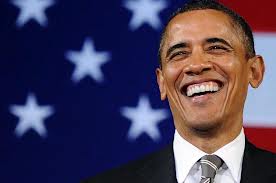
So whither Fermanagh?  Search me. (Which of course is what the small army of security will be doing down there to anyone who comes within miles of the demi-gods.)  Maybe Americans will look at Obama with a backdrop of Fermanagh and cry out “I will, I must visit this amazing place chosen by President Obama!  If it’s good enough for him it’s good enough for me”.  It could happen. On the other hand the weather plays a big part in these things. The BBC’s Newsline 630 yesterday had their anchorwoman Donna down there and despite her best efforts, it looked awful. Rain soaking everything, including the camera lens; Donna’s hair going all damp and limp; and the lakes, no doubt stunning on a good day, looking grey and choppy and decidedly uninviting. 

My money’s on the demi-gods’ visit making no difference to tourism. What’s yours on?


Friday, 14 June 2013

Sammy and Peter and Mikhail Gorbachev


Peter Robinson was on the telly last night,  emphasising how economics  (i.e., the money from Britain) was tied to our Shared Future. Makes  sense, I suppose. You’re more likely to look kindly on your neighbour if both of you aren’t scrabbling to survive.

So the thing is, where would we be without British money, eh? Down the plug-hole, into the depths of financial Hades with that lot south of the border. And although Peter didn’t say that, he certainly highlighted the link between the support we get as part of the United Kingdom and the ambitious plans for tearing down peace walls inside the next decade.

But hold. Did you catch that speech made by Conor Murphy  the other day? No? Well he said a few interesting things. Sammy Wilson had made the declaration in the Assembly that we are billions better off because we’re in the United Kingdom  - a kind of precursor act to Peter Robinson’s UK money/Shared Future bit on TV last night.  Conor Murphy raises a point that not many people know - or if they do, they’re keeping very quiet about it:

Here’s Murphy:

“Every time Sinn Féin questions the veracity of the claims we are fed a diet of guestimations that even the British government’s own Office of National Statistics or Treasury do not accept as correct.

Sinn Féin has requested figures from the Finance Department regarding the 23 revenue streams that are generated within the north and the 17 expenditure streams, without success. Rather than provide this valuable information which is in the public interest and crucial to our ability to engage in economic planning, Sammy Wilson has opted to politicise and personalise the debate.”

Did you know that? Me neither. I’d always sort of assumed that we knew how much we were getting and how much we were paying out in taxes, but it seems that notion is all based on the kind of book-keeping that Arthur Daly would have been proud of. 

Of course, it’s in Conor Murphy’s interest, as a Sinn Féin representative, that the figures show that we aren’t nearly as dependent on Britain as we’re led to believe. Maybe he’s wrong. On the other hand, maybe he’s right. The only way we’ll ever know is if we get the facts and figures about how much Britain puts in here and how much we pass into the British Treasury as tax-payers. Otherwise it’s like making decisions about the family budget while your bank manager acts all vague and talks about the weather when you ask him how much is in your account.

The Russians in the days of Gorbachev had a word for it:”glasnost”. (Yes, Virginia, it does mean ‘openness’ - top of the class.)  Let’s all have some glasnost and end the fantasy finance. 


Thursday, 13 June 2013

Barmy about Obama


I was walking along a street near Belfast yesterday and some schoolboys passed me on their way home. “The one I want to see is Obama!” one of them shouted, the way schoolboys do. And sure why wouldn’t he? Isn’t Obama the most powerful man on earth? And isn’t he a breakthrough - the first African-American to be elected to the White House? The man who believes in a policy of talking to one's enemies rather than attacking them.

That’s the message he’ll be bringing to schoolchildren and adults when he speaks in Belfast -  put violence behind you, find new and better ways of working together. You couldn't ask for sounder advice.

Except that Obama, like a lot of other political leaders, is a hypocrite. Take one instance: his drones policy. There are no firm figures but it’s estimated that for every terrorist that a drone bomb kills in Pakistan or the Yemen,  fifty innocent people have to go with him. Such drone bombs are used on a near-daily basis. Americans would argue that this saves the lives of American troops, and it probably does. Better have CIA agents in Virginia sending in unmanned drones than risking the lives of American troops, right? But think for a minute: this is defence of the US? Going to the other side of the world and sending in bombs that wipe out fifty innocents for every  (presumably) guilty person? 

Drones are now being used in the US for ‘peaceful’ purposes - a kind of eye in the sky. I even seem to remember that the PSNI here had purchased a number, whether to use permanently or just during the G8 conference I’m not sure. Shades of 'Big Brother is watching you'. But if you think that drones which can be armed will always be used for strictly observational purposes in the US or here or anywhere else, then you really should see your doctor. 

The commentator Maureen Dowd wrote in the New York Times  two days ago: 

"Back in 2007, Obama said he would not want to run an administration that was "Bush-Cheney lite." He doesn't have to worry. With prisoners denied due process at Gitmo starving themselves, with the CIA not always aware who it's killing with drones, with an overzealous approach to leaks, and with the government's secret domestic spy business swelling, there's nothing lite about it.”

This is the man we feel honoured to have come visit us. Maybe we all should see a doctor. 


Wednesday, 12 June 2013

How not to read a book


George Bernard Shaw had a word or two to say about book censorship: “Censorship ends in logical completeness when nobody is allowed to read any books except the books that nobody reads.”
That hasn’t prevented the CCEA obediently following the promptings of Mike Nesbitt and his party that the teaching guide with the Carnegie-Medal-winning  novel Bog Child  be taken off the syllabus, perhaps temporarily, perhaps forever. Why was Mike so annoyed with it? Well let the man speak for himself:

“How dare the Department of Education ask pupils to put themselves in the shoes of hunger strikers! What about the shoes of the prison warders who had to carry out their jobs during dirty protests and hunger strikes, constantly having to endure the whispered death threats from inmates directed at their wives and children? What about the prison officers who were murdered?”

I think Mike has a point there. In fact, it’s a well-worn strategy in English teaching to ask pupils to put themselves in the shoes of some of the characters in a book. So yes, it would be an idea to have children empathise with the prison warders as well as the hunger strikers. In fact I thought that was what we all were supposed to do, schoolchildren or not - walk a mile in the other guy's shoes. 

On the other hand I’m deeply uneasy about the direct intervention of a politician in how a subject should be taught. Teachers and curriculum devisers are presumably chosen because of their expertise in their field. You might as well ask a ditch-digger or a dentist to judge on the adequacy or otherwise of a teaching strategy as ask a politician. In fact the ditch-digger or dentist would be better placed to judge, since they’d be less likely to have a political agenda. 

There are people who are contemptuous of Mike Nesbitt. I’m not. As a person I think Mike is generally calm and articulate and reasonable. But with this intervention he has shown bad judgement and set an appalling precedent. What next? Strike Yeats’s poem Easter 1916  off the curriculum for appearing to empathise with the revolutionaries? Or should that be ‘murdering terrorists’?

Shaw had another comment on censorship: “Assassination is the extreme form of censorship”.  Maybe the teaching guidelines writer got off lightly.


Tuesday, 11 June 2013

Nelson puts a bit of stick about


I see my old friend Nelson McCausland is in the news again.  Nelson is a man of great moral integrity, which means he’s always alert to any case where people may be falling short of the high standards he himself observes. In case you’re raising your eyebrows at that, let me remind you that when he was Minister of Culture, Arts and Leisure, he wrote to the Ulster Museum telling them to display a range of Creationist and other anti-evolution material. His high standards told him that the job of the Museum was to “reflect the views of all the people in Northern Ireland”. Richard Dawkins at the time suggested that maybe the museum should also exhibit the stork theory of where babies come from - “or perhaps the museum should introduce the flat earth theory”.  

These days Nelson is getting a bit puce-faced over this  £18 million in the Housing Executive accounts that's gone missing. He says it’s “a scandal”  and the result of either “incredible incompetence” or “wilful corruption”. “This is taxpayers’ money that could have been used to build around 200 much-needed social homes”. 

I like that kind of talk. It shows a Minister with a strong ethical backbone, and when he comes on people who have done wrong, he swings his parish-priest blackthorn stick with energy and in a very public way.  In fact, Nelson is so caught up in stick-swinging he's quite forgotten that there’s a link between the Minister for Social Development and the Housing Executive. That is, the Minister is er um you know responsible for the Housing Executive. If that’s the case,  the buck stops at the top and the Minister is maybe damaging himself each time he swings that blackthorn  at the Housing Executive. 

But I’m sure there's another, more innocent explanation. It’s surely not conceivable that a Minister would yell for everyone’s attention while he hits himself over the head with a big stick. Isn't it?


Monday, 10 June 2013

Is Mike Nesbitt mad?


Is Mike Nesbitt a bit mad?  Does he spend his evenings threading daisies in his hair and claiming to be the reincarnation of one of the Wooden-tops? I doubt it. But at the same time there are different kinds of madness and different degrees of madness, and I’m beginning to think Mike may need, um, help. 

Consider if you will his political path. Having assumed the UUP leadership, he’s been casting around for an issue that’d give his party credibility. So far he’s been spectacularly unsuccessful. Which is a pity, really, because Mike clearly wants to be seen as a moderate, rational sort of unionist, one who eschews the flag-waving, croppies-lie-down approach to things.  It’s also a fact that he’s perhaps the  first leader of the UUP not to be an Orangeman (there is no evidence either way on Edward Carson). And he’s a graduate of Cambridge University.

So when a golden opportunity to present unionism’s case to the people who most need to hear it -  republicans  - became available at the Shinners’ Europa conference last Friday, you’d think Mike would have leapt at the chance. Uh-uh. First it was yes, then it was no. Instead  Mike backed into the unthreatening arms of the Belfast Telegraph. There he  explained how if we got our past right, we’d be in a key position to make progress with the future.

Spot on, Mike. So what about the past? What’s called for?

Well, Mike sees any fruitful future dependent on one thing: that republicans concede publicly that their campaign of “terrorist murder” was unnecessary to get to where we are today, and that they should apologise for what they’ve done. Or to put it another way, the best way for two antagonists to make peace is for one of them to admit he was totally to blame for everything. 

The interesting thing is, I was at the Sinn Féin conference and do you know, none of the unionists who spoke, either from the floor or in the group sessions, mentioned the need for republicans to take all the blame. In fact they seemed much more focused on the future, on unionists finding a secure place in a world where nobody seemed to want them - not Britain and not the south of Ireland either. What they wanted, they said, was people sitting down and presenting a clear articulation of the advantages of the union, and ditto from those who believe in a united Ireland. 


That struck me as an eminently sane approach and sharply divergent from the UUP leader’s position. Which would suggest that Mike might, despite being smart and having been to Cambridge, be a bit out of touch with  the real world. Which is madness of a sort, isn’t it? Or maybe he’s been out in the sun too long. 

Sunday, 9 June 2013

Funeral of an unreconstructed republican


I never met Ruairi O Bradaigh. The nearest I got was on a ferry from Cherbourg to Rosslare, as we returned from a holiday in France. Getting into his car and waiting for the boat to dock, his familiar semi-smiling front teeth were the only thing that distinguished him from the dozens of other drivers. 

His death and funeral were in the news yesterday, as the TV showed the gardai clashing with members of the funeral party. We weren’t given details of why, but the picture was so reminiscent of similar clashes between mourners and the RUC over the years of the Troubles, it was like a brief dip into a time warp.  The RUC used to make the display of beret and gloves on the coffin of the dead IRA man or woman an excuse for scenes that would, to quote Peter Brooke in a different context, have disgraced a tribe of cannibals.


Like the Bourbons, the gardaí appear to have forgotten nothing and learnt nothing. The echoes of the past that such scenes evoke will not be lost on young men and women today, and the primitive activity of the gardaí, whatever the provocation (if any) will hardly win the sympathy of those who were intent on burying a man they considered an Irish patriot. As so often in the past, the forces of law and order have stupidly played the role of recruiting sergeant.