Jude Collins

Saturday, 8 June 2013

Come together: Sinn Féin at the Europa


I spent an interesting couple of hours at the Sinn Féin conference in the Europa Hotel yesterday. It was titled Belfast: A City of Equals on an Island of Equals and the main speakers were Pete  Shirlow from Queen’s Univeristy and Deputy First Minister Martin McGuinness.

The interesting stuff began outside the Europe, where a dozen or so protestors with large banners  and union flags stood. ‘Our Deputy First Minister - When Will He Be Arrested?’  and ‘PSNI - Gerry Kelly’s Puppets’  were among the more prominent.  I spoke briefly to Gerry Kelly and he confirmed that he’d had lots of verbal abuse hurled at him as he came in. One guy, apparently, kept calling ‘ No, listen Gerry, can  you give me a second, I’ve something I want to say, c’mere over here!’  Gerry, having been round a few corners in his time, declined the invitation. “What he wanted was me near enough so he could hit me a dig”.  I reminded him that the opposite of being loved was not to be hated but to be ignored. I’m not sure if he believed me either.

The conference was notable for the people who were there and for the things that were said. There was a former member of the Parachute regiment, the Chief Constable and Assistant Chief Constable of the PSNI, Gerry Adams, Gerry Kelly,  Jim Gibney, Dawn Purves, Alan McBride whose wife and father-in-law died in the Shankill bomb,  Methodist minister Harold Good, Pastor Gary Mason from the East Belfast Mission,  interested unionists, interested republicans  - but no Mike Nesbitt. Poor Mike.  Like Lanigan’s Ball, he stepped and he stepped out again. He was to come and then had second thoughts. He was, as they say, conspicuous by his absence. 

I’m not sure the title of the conference conformed totally to the Trade Descriptions Act. There was much more talk about coming together than equality. Martin McGuinness and others said it was a pity the protestors outside couldn’t have been persuaded to come in and be part of the discussion. And that’s what the conversation was about: how can the people in this state come together and see where they agree and disagree, what their vision of the future is. 

There was a group discussion afterwards which I found very informative. I’d say there probably was a balance of unionists and republican in our group, and the discussion time was sadly limited. But what I was impressed by was how open unionists were about their feelings. They spoke of the suspicion that is aroused among unionists when Sinn Féin take the lead in some initiative, including this conference. They spoke of their awareness that Britain would be shot of them tomorrow if she could. They spoke of their shock in discovering that their grandparents were from Westmeath, and urged that funding be made available so that more unionists could discover that their roots were not confined to this tight little corner of the island. They spoke of their concern to find out what republicans meant when they talked about a united Ireland. They spoke of their desire for a sense of belonging. 

Very impressive. Martin McGuinness too touched on the problem of suspicion when Sinn Féin took the lead also. It reminded me of the days when people said they’d like to learn the Irish language but it had been hi-jacked by Sinn Féin. The answer to that, of course, was to hi-jack it back again, which is what is happening in places like the East Belfast Mission where unionists are learning Irish in growing numbers. 

That’s what needs to happen in terms of discussion of how we see the future. All sides, from flag-protestors to Sinn Féin to eirigi, need to share a platform where each can articulate the problems they see with the present. and how they see the future and why.

My own feeling is that those who believe in a united Ireland - notably Sinn Féin - need to be precise and clear about the two or three major reasons why they think a united Ireland is desirable. One of those reasons would probably be economic, in which case they need to point to hard evidence, in terms that the ordinary unionist can understand. Likewise flag people and hard-core unionists need to make clear what benefits they see themselves enjoying as part of the United Kingdom, and how those would be lost - if that’s what they believe - in a united Ireland.


It was a morning filled with insights, particular during the group discussion. I’m left with the strong conviction that we’re in a time of flux, with the opportunity to shape the future so that everyone in the north feels a sense of ownership and inclusion. It’s a bit like siblings that’ve been separated for a lifetime and then meet. It can end in permanent estrangement or exciting new relationships.  After yesterday, I’m considerably cheered that the latter may be the case.  

Friday, 7 June 2013

"I wish I was in the NI21" - the Saw Doctors. Sorta.


Basil McCrea and John McAllister are two of the nicest men you could meet. On the few occasions I’ve been in Stormont, I’ve had reason to be introduced to both and they were polite, friendly and good company. If ever there were a pair of unionists who were likely to bridge the Protestant-Catholic gap, they’re it.

That’s the good bit. The bad bit happened last night when both men were interviewed, notably by Mark Carruthers on the BBC’s  The View.  Mark asked regarding the constitutional question  (what a lovely way of putting it that is!) and Basil said sure we all know that’s been done and dusted, the constitutional question is no longer an issue. 

Dream on, Basil. And John. It may have moved from physical force to the force of argument, it may not emerge naked and red-eyed to dominate every debate, yes people have other things they’re concerned about like a job and a mortgage and the quality of society they live in. But alas Basil, there ain’t no dodging it, which is  why you’ll designate your brand new shiny  NI21 party ‘unionist’ up at Stormont. And while I’m sure there’ll be a number of Catholics will join, just as there are a number of Catholics who joined the Alliance Party,  I wouldn’t hold your breath that you’re about to change the face of politics here. 

I do wish NI21 success. If we’re going to have a unionist party here, I’d much prefer to be working alongside Basil and John than I would, say, Peter and Sammy. But I fear for them, I really do. Plus I’m beginning to fear for unionst parties of any hue. Why?  With the arrival of NI21, that makes four unionist parties (oh stop making those noises, David Ford and admit it - you’re a unionist). Which means we’re moving back to a point which I thought we’d left behind, when there were something like seven different unionist parties represented at Stormont. The arrival of NI25 means there are now only four unionist parties. In nationalism, there are two. 


It’s a bit like the PUP, guys.  I like you, I like your leaders,  you’re as good as a unionist party can probably get. But t I’m afraid you’re going to go away, you know. 

Thursday, 6 June 2013

The Mau Mau and official lies


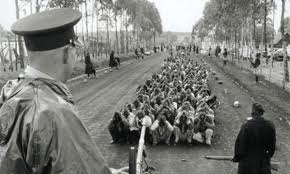
So. Having watched the TV evening news, do you know what would be nice? If we didn’t hear any more garbage about the many good things that the British Empire brought to the dark corners of the world. I remember the Pathé newsreels as a child, and how everyone believed what they were told about the dreaded Mau Mau and the  savage practices they engaged in. 

Nothing compared to the British, it seems, to judge from this evening’s news. Thousands of Kenyans back then were killed, tortured, mutilated, castrated. And when the surviving victims went in search of  truth, the British authorities did all they could to bury it as deep as they did some of their victims. Finally, after years of cover-up, they’ve ‘fessed up, apologised and are now preparing to give surviving victims £2000 each. I’m not sure why I feel a little ill when I hear that. But I do know what I felt when I saw those old men and women dancing to express their joy after their long struggle. 

And before some Brain-of-Britain weighs in to ask me when the IRA is going to ‘fess up, we’re talking here about the British authorities. The people who ran the place at the time. The people who were depicted in the media as the goodies. The people whose job it was to govern with humanity and justice. 

And what did I feel as I watched those old men and women dance in joy? The unbreakable generosity and forgiveness of some human beings, no matter what horrors are visited on them. Bobby Sands said our victory will be in the laughter of our children. These people’s victory lies in their own laughter. 


Polls and a play:outlook sunny


Opinion polls are a bit like the weather. One minute they have you  feeling that life is going the wrong way entirely and what’s the point of it all? Other days the sun glistens on  trees and grass and you feel glad to be alive amid all this beauty and bliss.

The famous ‘Northern Irish’ poll a while back had the wise heads scratching their skulls and declaring that more and more people had no time for changing the state’s constitutional position but thought of themselves as ‘Northern Irish’ before either Irish or British. Now we have a new Life and Times Survey that tells us  something a bit different.


  • There’s been a drop of 11% in the number of people who see the north as remaining within Britain. Between 2010 and 2012,  it went from 78% of people wanting to remain within Britain to 62%. 
  • Among young people -18-24 -  just 42% think the north will remain within Britain 
  • Of those who believed the north would remain within Britain, 77% said they would accept a united Ireland. 
  • On identity, 38% of respondents felt more Irish than British, 39% felt more British than Irish, and 17% felt equally British and Irish. 

What you make of all this is very much dependent on the weather, which politician you were last listening to and the state of your digestion. But if you look at the figures carefully,  you may find yourself in the situation I more and more find myself in: identifying with the words of Mr B Dylan,  who famously wrote that “Something’s happened/But you don’t know what it is/Do you, Mr Jones?’

We are privileged to live in exciting political times.

But not by opinion polls alone does man or woman live. So if you’re looking for theatrical excitement instead, you could do worse than get down to the Strule Arts Centre in Omagh. A play called ‘Raisins Aren’t Sexy’ is running there (two more nights - tonight and tomorrow).  It’s written by local man Adrian Mullan and it’s about a man who’s fed up being taken for granted and sets about privatising his mind and charging advertisers.  The result is a court case stuffed with advertising language and nerve-jangling jingles and gasping-for-breath laughs. And yes, the timing is deliberate: the play has one eye cocked at the imminent arrival of our all-powerful betters at the G8 conference in Fermanagh.

Sometimes, as the Reader’s Digest used to remind us, laughter is the best medicine. 


Wednesday, 5 June 2013

So tell me this: what's murder and what's not?


There must be better things to do on a glorious summer morning than write about killing and murder, but it’s one of those things that keeps coming up.

The matter of murder seems to hold great fascination for a lot of peoplehere, particularly murder as it relates to the Troubles and more particularly as it relates to the actions of the IRA in the Troubles period. 

My dictionary defines murder as “the act of putting a person to death intentionally and unlawfully”. That last word is probably the most important - ‘unlawfully’. It hints that there might be a lawful circumstance in which someone is put to death intentionally.  

Are there circumstances where the intentional putting of a person to death is lawful? Well for years in Britain and Ireland, capital punishment was lawful.  In many parts of the world it still is. Outside capital punishment, if we look at two of the greatest mass killings in modern times - Hiroshima and Nagasaki - few people would say that hundreds of thousands of people were murdered on the command of Harry Truman. Likewise those who kill in the name of their country - British soldiers who have fought and, presumably, killed in places like Afghanistan  - not only are not considered murderers, they are hailed as heroes and often given medals for their work. 

But that’s not new. The American Revolution of 1776, the storming of the Bastille in 1789 , Easter 1916 - these are seen as heroic acts, selfless acts which involved the intentional putting of many people to death. There are some - usually unionist - who see the men of Easter 1916 as murderers, but most Irish people would regard them as heroes. When the ten hunger-strikers died here in 1981, they did so on the grounds that they should be regarded as political prisoners, not common criminals. That is,  that the killings or related actions they were involved with were not murder.

The taking of human life must be the ultimate obscenity. Each life is unique and to snuff it out is a truly terrible deed. But since human beings existed, probably, there has been the belief that in some circumstances, killing others is the only course left open. To say that you chose not to kill while others did is not a valid argument, for the very good reason that we can’t have the experience of others, only our own. We don’t know what possibilities existed or seemed to exist for them, what seemed to them morally justified or not morally justified. And as I say, since earliest times groups and tribes and nations have seen physical force as their only resort and have used it, and a distinction between that and killing for private motives of revenge or spite is universally accepted. 

So when people insist that killings in a particular conflict are murder, what they really mean is that the conflict was unnecessary and that other means of redressing problems of injustice and post-colonialism could have been used. When people such as the hunger-strikers insisted that armed force - the killing of others - was the only course left open to them, they are arguing that what they did beyond the prison walls must be distinguished from the actions of the common murderer.


If you’re a pacificist, you’ll reject that argument along with every other argument for the taking of human life. If you’re not a pacifist and condemn the physical force used during our Troubles, to be consistent you’ll have to condemn George Washington, Winston Churchill, Sir Walter Raleigh,  Henry VIII and just about any leader who saw violence and the killing of others as the only possible  option in the circumstances. I haven’t heard anyone presume to call any of those named above a mass murderer.  But then, consistency has never been a striking feature of those who cry “Murder!” about the period of the Troubles. 

Tuesday, 4 June 2013

Chewing the SPAD rag with Malachi on Nolan


Red herrings and back where we started


I’m just off the Nolan Show, where my sparring partner Malachi O’Doherty managed for a time to claim that the last few days have been about the legitimacy or illegitimacy of the IRA campaign. Anyone who’s ever read Malachi will know he believes it was illegitimate and never loses a chance to say so. His views are shared by thousands of unionists. Equally, there are thousands of republicans who think their campaign was not illegitimate and has direct links with the insurgency that developed in 1916 and the years following, and which will be commemorated and paid tribute to by people all over Ireland in three short years from now.

But as I say, the debate should not have been about Malachi’s red herring. It should have been about whether it was right that a law was passed last night which will eject Paul Kavanagh as special adviser to Martin McGuinness. My belief is that it should not, for several reasons. 

One is that this looks suspiciously like double jeopardy, where someone gets punished for what the state pronounces a crime and then, years later, is punished again. Countries like Canada, Mexico, the US believe that protection from double jeopardy is so important, they’ve built it into their constitution. Even Britain, which a few years back jettisoned the double jeopardy protection, still requires “new and compelling evidence” before someone can be tried again. Was there new and compelling evidence in Paul Kavanagh’s case? No. 

Jim Allister claimed yesterday that the bill should be known as ‘Ann’s Law’. I disagree. The two people who were true parents of last night’s bill were Jim Allister and Alasdair McDonnell. In a time when we’re told  we must try to put the old quarrels of the past behind us, when we are told the emphasis must be on creating jobs,  the Allister-Alasdair bill has hurled us back into the past, where old quarrels are resurrected, spitefulness and discrimination rule the day, and rather than create jobs, the law sees that someone is kicked out of his job. 


But it’s not bad news for everyone. This morning the dissident republicans must be licking their lips and saying: “See? We told you so. Nothing has changed”.